
Website Redesign Cost in 2026: What Actually Drives the Price

12 August 2026
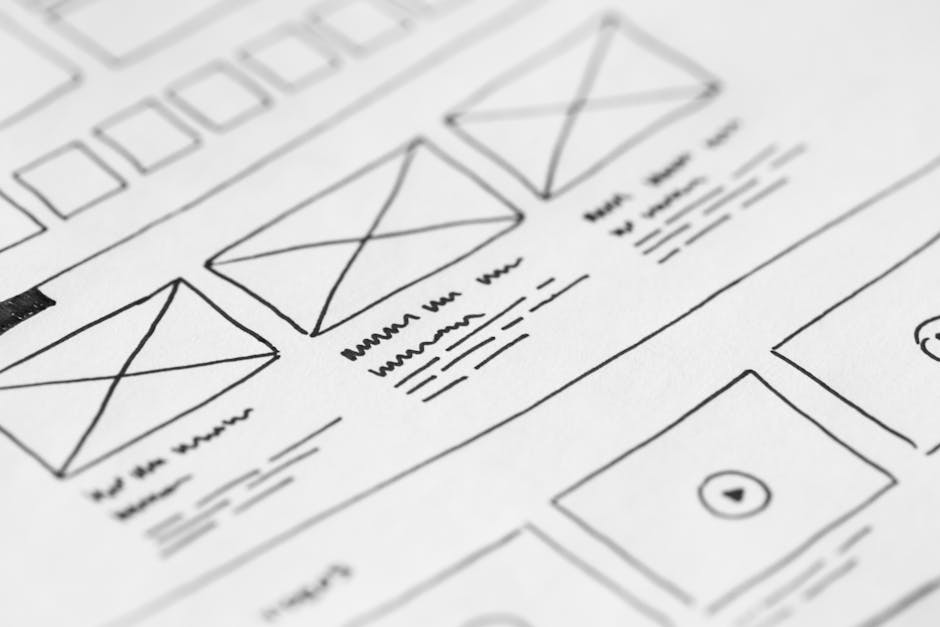
Almost every redesign conversation opens the same way: "our site looks dated, we want to bring it up to date, what does that cost?" The only useful reply is a question back. Is it the surface that has aged, or the machine underneath? Depending on the answer, the same sentence describes a €3,000 job or an €80,000 one, and confusing the two is the most expensive mistake in this whole exercise.
What follows is how I separate the three kinds of redesign, the signals that make one genuinely necessary rather than merely tempting, and the single line item that decides whether you keep the traffic you already have. The ranges below are what this work costs on the European market where I operate; they are a starting point for a conversation, not a price list.
Three kinds of redesign, three different bills
Cosmetic redesign, roughly €3,000 to €8,000. The structure stays, the content stays, the visual layer is replaced: typography, colour, spacing, components, responsive behaviour. This is the right job when your traffic is fine, your pages convert acceptably, and the site simply looks like the decade it was built in. It is also the one most often oversold as something bigger.
Structural redesign, roughly €8,000 to €25,000. Navigation, templates and content types are reorganised. Pages are merged, split or removed, and the URL structure usually changes with them. This is what you need when visitors cannot find things, when the site has accumulated ten years of pages nobody planned, or when the same information exists in four places and contradicts itself.
Complete rebuild, from €25,000, up to €80,000 or more. A new technical stack, migrated content, and functionality that did not exist before: a customer area, an integration with your business tools, an AI assistant that answers from your own documentation. This is a software project that happens to include a website, and it should be quoted like one.

The signals that actually justify a redesign
"It looks dated" is a real reason, but on its own it justifies the cheapest of the three jobs. The signals below are the ones that change the arithmetic, because each of them costs you money every month it goes unfixed:
- Mobile visitors leave immediately while desktop visitors stay, the layout is failing where most of your traffic is.
- You cannot publish a page without calling someone. A site your team cannot update is a site that stops being true.
- The stack is no longer maintained, so security updates either do not exist or break something each time.
- Pages take seconds to become usable, which costs you both visitors and ranking.
- Traffic arrives but nothing happens: no calls, no forms, no quotes. That is a conversion problem, and a new coat of paint will not touch it.
- Your business changed and the site still describes what you did three years ago.
If none of these apply and the site merely looks old, say so out loud before signing anything. Sometimes the honest recommendation is a €4,000 refresh instead of the €30,000 project that was proposed, and a provider who never reaches that conclusion for anyone is telling you something.
The line item that decides whether you keep your traffic
Search rankings are attached to URLs, not to sites. The moment a structural redesign renames, merges or removes pages, every ranking pointing at the old address needs to be told where the content went. That is what a 301 redirect map does: one line per old URL, pointing to its closest equivalent on the new site. Every URL, including the ones nobody remembers.
This is unglamorous work, it takes real days on a large site, and it is the first thing dropped from a quote that needs to look cheaper than the next one. The bill arrives later: a site that launches beautifully and quietly loses the traffic it took years to build. When you compare two proposals and one is noticeably cheaper, look for this line before concluding anything about the price.
What it costs to run afterwards
A redesign changes your running costs, usually downwards. Low-end shared hosting that suited an old CMS is a poor fit for a modern static or edge-rendered site, and the replacement is often cheaper: hosting a fast marketing site on a modern platform typically costs between nothing and about €25 a month, for performance the old setup could not reach. Budget separately for maintenance, dependency updates, small content changes, monitoring, rather than discovering it as a surprise in month three.
Reading a quote in three checks
First, count the questions you were asked before the number appeared. A price quoted from a glance at your homepage is a price that will move. Second, look for days per task rather than a single round figure: not to haggle over each line, but because a provider who cannot break the work down has not thought it through. Third, find the SEO migration and the redirect map in writing. Those three checks separate most serious proposals from most optimistic ones, and they take ten minutes.
Frequently asked questions
How much does a website redesign cost in 2026?
It depends entirely on which of three jobs you are buying. A cosmetic redesign - same structure, same content, new visual layer - runs roughly €3,000 to €8,000. A structural redesign that reorganises navigation, templates and content types typically lands between €8,000 and €25,000. A complete rebuild on a new technical stack, with migration and new functionality, starts around €25,000 and can reach €80,000 for a large site. Any quote given before that distinction is made is a guess.
Will my site go down during the redesign?
For a cosmetic or structural redesign, the new version is built in parallel on a staging environment and the switch happens inside a controlled window, often at night, with two to four hours of downtime at most and sometimes none at all when the DNS cutover is prepared properly. A complete rebuild on a new stack is usually switched over progressively, keeping the old site serving until each section is live.
Will a redesign hurt my search rankings?
It can, and this is where most of the damage happens. Rankings are attached to URLs, so changing your URL structure without a complete 301 redirect map tells search engines that hundreds of pages simply disappeared. Done properly, with every old URL mapped to its closest new equivalent, a redesign is neutral to positive. Done without that work, sites routinely lose a large share of their organic traffic and spend the following year earning it back.
How can I tell whether a redesign quote is honest?
Three signals. First, the provider asks a dozen questions before quoting - current traffic, business goals, existing stack, user journeys, hosting constraints - because none of that can be inferred from looking at your homepage. Second, the quote breaks days down per task instead of showing one round number. Third, SEO migration and the redirect map appear as explicit line items. A quote that omits the third point is cheaper today and expensive next year.
Should I redesign everything at once or in stages?
Below roughly €25,000, doing it in one go is faster and cheaper overall, because splitting the work duplicates setup and coordination. Above that, and particularly when the stack changes, a staged approach - by section, by template or by audience - limits the risk and lets you measure the effect of each step. It is less efficient in the short term and considerably safer.
Who owns the code after a redesign?
At ZAX, all of the source code belongs to you and is delivered to your own Git repository as the work progresses. A clause that keeps ownership with the agency should be a deal breaker for any serious business: it means paying a recurring licence, or losing your site if you ever change provider. It is worth checking explicitly, because it is rarely volunteered.
Where to start
Before asking anyone for a price, write down two things: what the site fails to do today that costs you money, and what you want to be able to do yourself once it is rebuilt. Those two answers decide which of the three jobs you actually need, and they turn a vague "how much for a new site?" into a question that can be quoted honestly, by me or by anyone else.